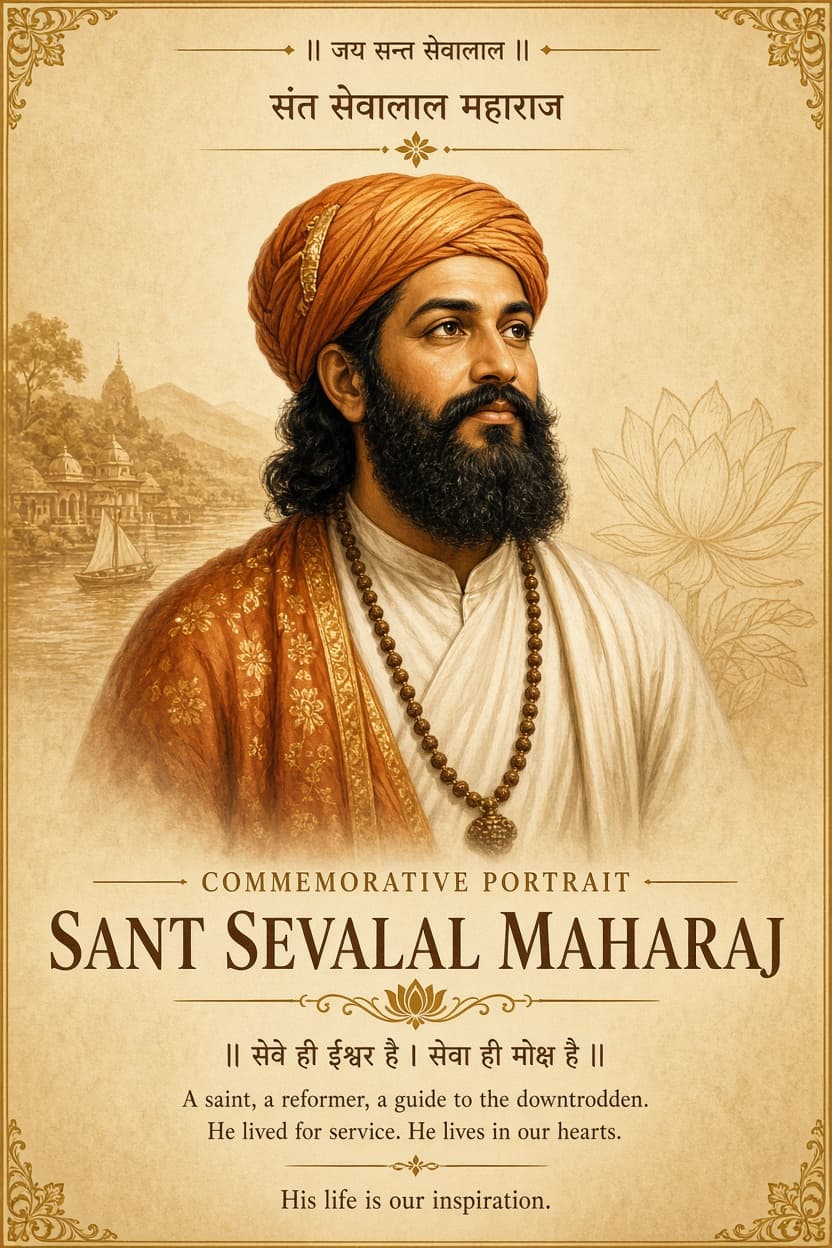
Spiritual guide and social reformer · also known as Sevabhaya
Sant Sevalal Maharaj
c. 1739–1806 (commonly cited; verify)
Revered by many Gor Banjara / Lambadi communities as a guru and reformer. Remembered for teaching service, opposing harmful customs, and shaping community identity. Exact local traditions about his life can vary by region.
Sant Sevalal Maharaj (also called Sevabhaya / Sevadas in community memory) is widely remembered as a spiritual and social guide for Gor Banjara communities across parts of Maharashtra, Karnataka, Telangana, Andhra Pradesh and neighbouring regions.
Published accounts commonly place his life in the eighteenth century (often cited as 1739–1806). Birthplace traditions differ in public sources (including places associated with today’s Andhra Pradesh / Karnataka regions). Editors should confirm the version the community wants presented here.
He is associated in community tradition with reverence for Jagadamba, care for cattle and nature, opposition to superstition and animal sacrifice, and respect for women and elders. Folk songs and oral epics recited by traditional bards (often called Bhats) keep his memory alive in many tandas.
His samadhi at Poharadevi (Washim district, Maharashtra) is an important pilgrimage and gathering place. Community flags often mark reverence — white associated with Sevalal and pink/red with Jagadamba in many settlements.
Jai Banjara’s brand line — “Sevabhaya wanted us to be like Kesula” — connects this living reverence to the Kesula flower as a symbol of pride and continuity. Treat miracle narratives as faith traditions, not verified historical claims, unless editors add consented sources.